Prepaid vs Postpaid in Malta: Which Plan Type Actually Saves You Money?

James Whitfield
30 April 2026
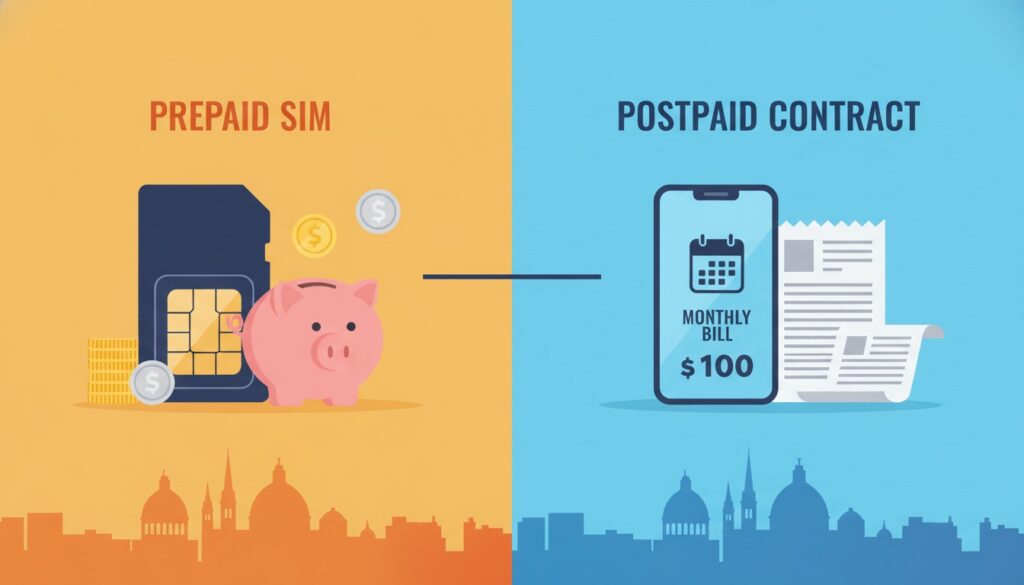
Prepaid vs Postpaid in Malta: Which Plan Type Actually Saves You Money?
Choosing between a prepaid and postpaid mobile plan in Malta might seem like a minor decision, but over the course of a year, the wrong choice could cost you hundreds of euros. With three main operators — GO, Melita, and Epic (formerly Vodafone Malta) — each offering a dizzying array of plans, bundles, and add-ons, it’s easy to get lost in the fine print.
In this guide, we’ll break down the real differences between prepaid and postpaid plans across all three Maltese operators, crunch the numbers on actual costs, and help you figure out which plan type genuinely saves you money based on your usage habits.
Understanding the Basics: Prepaid vs Postpaid
Before diving into operator-specific comparisons, let’s clarify what each plan type actually means in the Maltese market.
Prepaid (Pay-As-You-Go)
With a prepaid plan, you top up your account with credit before you use it. You buy a SIM card, load it with credit (either via vouchers, online, or through an app), and then consume minutes, texts, and data from that balance. When your credit runs out, you simply top up again.
Key characteristics:
- No contract or commitment
- You control exactly how much you spend each month
- Credit expires if not used within a set period
- Typically higher per-unit costs for calls and data
- Easy to switch operators at any time
- Monthly commitment, often with a binding contract
- Lower per-unit costs and better data allowances
- May include subsidised smartphones
- Risk of bill shock from overages or roaming charges
- Early termination fees if you leave before the contract ends
- Prepaid: Unused data from bundles typically does not roll over to the next month. Once the bundle expires, any remaining data is lost.
- Postpaid: Some postpaid plans offer data rollover for one billing cycle, but this varies by operator and plan tier. Always check the terms.
- Light users who primarily use Wi-Fi and need mobile data only occasionally
- Tourists and short-term visitors to Malta who need a local number for a few weeks
- Budget-conscious users who want to set a hard spending cap with no risk of overages
- Teens and students whose parents want to control mobile spending
- People who switch operators frequently to chase the best deals
- Dual-SIM users who keep a secondary line for specific purposes
- Heavy data users who stream video, music, or use mobile hotspots regularly
- Business users who need reliable connectivity and can’t afford to run out of credit
- Families who can benefit from multi-line postpaid discounts
- Anyone who wants a subsidised smartphone as part of their plan
- Melita home customers who can bundle mobile with internet and TV for big savings
- Frequent EU travellers who want seamless roaming included in their plan
- Audit your actual usage first. Check your last three months of data, call, and SMS usage before choosing a plan. Don’t pay for 30GB if you only use 5GB.
- Watch for seasonal promotions. All three Maltese operators run regular promotions — especially around Black Friday, Christmas, and back-to-school season. Timing your sign-up can save you significantly.
- Consider a rolling monthly postpaid plan. If you want postpaid benefits without the contract lock-in, look for month-to-month postpaid options. You’ll pay slightly more than a contracted plan but retain the flexibility to leave.
- Set data usage alerts. Both prepaid and postpaid users should enable data usage notifications on their phones to avoid running out of data (prepaid) or incurring overages (postpaid).
- Negotiate at renewal time. When your postpaid contract is about to expire, call your operator and ask for a retention offer. Operators often provide exclusive discounts to keep existing customers.
- Use our comparison tools. Don’t just take the operators’ word for it — use independent comparison sites to see real, up-to-date pricing across all three networks.
Postpaid (Contract / Monthly Bill)
A postpaid plan means you sign up for a monthly subscription — often with a 12- or 24-month contract — and receive a bill at the end of each billing cycle. You get a set allowance of minutes, texts, and data, and you pay for any overages.
Key characteristics:
Pro Tip: In Malta, postpaid plans don’t always require a long-term contract. Some operators now offer rolling monthly postpaid plans with no lock-in period — giving you the best of both worlds.
Comparing the Three Maltese Operators: Prepaid vs Postpaid
Let’s look at how GO, Melita, and Epic stack up when it comes to prepaid and postpaid offerings.
GO Mobile
Prepaid:
GO’s prepaid options revolve around top-up bundles. You can purchase weekly or monthly data and call bundles that activate on top of your base credit. A typical prepaid monthly bundle might give you 5GB of data and 100 minutes for around €10–€15. Without a bundle, standard data rates can be steep — sometimes €0.50 per MB or more if you’re not careful.
Postpaid:
GO’s postpaid plans start at around €15–€20 per month for entry-level packages, but they typically include significantly more data (often 10GB–30GB or even unlimited options), unlimited local calls and texts, and sometimes EU roaming allowances. Higher-tier plans may include phone subsidies.
Verdict: If you use more than 5GB of data per month, GO’s postpaid plans generally offer better value per gigabyte.
Melita Mobile
Melita is known for bundling mobile with home internet and TV services, but their standalone mobile plans are competitive too.
Prepaid:
Melita’s prepaid bundles are straightforward. Monthly prepaid data bundles typically range from 2GB to 10GB, with prices between €5 and €15. One advantage is that Melita occasionally offers bonus data promotions for prepaid customers who top up a certain amount.
Postpaid:
Melita’s postpaid plans shine when bundled with their home services (internet, TV, fixed line). Standalone postpaid mobile plans start around €13–€18 per month and include generous data caps, often 15GB to unlimited data. Multi-service customers can unlock significant discounts — sometimes saving €5–€10 per month on their mobile bill.
Verdict: If you’re already a Melita home customer, their postpaid bundle discounts make prepaid almost impossible to justify financially.
Epic (formerly Vodafone Malta)
Epic rebranded from Vodafone in 2024 and has been aggressively competing on price.
Prepaid:
Epic’s prepaid plans offer some of the most competitive data rates in Malta. Monthly prepaid bundles can provide 8GB–15GB of data for €10–€15, and they frequently run promotions offering double data or bonus credit on top-ups.
Postpaid:
Epic’s postpaid plans are similarly aggressive, starting from around €15 per month with 20GB+ data, unlimited calls and SMS, and EU roaming included. Their premium postpaid tiers can go up to 50GB or unlimited data for around €30–€40 per month.
Verdict: Epic offers the smallest gap between prepaid and postpaid pricing, making their prepaid plans particularly attractive for moderate users.
The Hidden Costs You Need to Watch Out For
The sticker price of a plan is only part of the story. Here are the hidden fees and gotchas that can tip the balance between prepaid and postpaid:
1. Credit Expiry (Prepaid)
Most prepaid credit in Malta expires after 30 to 90 days if you don’t top up again. If you forget to use your balance or go on an extended holiday, you could lose your remaining credit. Some operators also deactivate your number after prolonged inactivity (typically 6–12 months).
2. Data Rollover Policies
Not all plans treat unused data the same way:
Important: Data rollover can make a significant difference if your usage fluctuates month to month. A plan with rollover might save you from buying extra data during heavy-use months.
3. Overage Charges (Postpaid)
One of the biggest risks with postpaid plans is bill shock. If you exceed your data allowance, you may be charged premium rates for additional data — sometimes €2–€5 per extra GB. Some operators now cap overages or throttle speeds instead of charging extra, but you should always confirm this before signing up.
4. Early Termination Fees
If you sign a 12- or 24-month postpaid contract and want to leave early, expect to pay an early termination fee. This is typically calculated as the remaining monthly fees for the rest of your contract, though some operators cap this amount. For a €20/month plan with 12 months remaining, that could mean a €240 penalty.
5. Roaming Charges
While EU roaming is generally included at no extra cost (thanks to EU regulations), roaming outside the EU can be extremely expensive on both plan types. Postpaid plans sometimes include small roaming allowances for non-EU countries, while prepaid users are more exposed to high per-minute and per-MB roaming rates.
6. SIM Card and Activation Fees
Some operators charge a one-time SIM card fee (typically €5–€10) for prepaid activations, while postpaid plans may waive this fee as part of the contract sign-up. It’s a small cost, but worth noting.
Who Should Choose Prepaid?
Prepaid plans are ideal for:
Who Should Choose Postpaid?
Postpaid plans make more sense for:
The Verdict: Which Actually Saves You Money?
Here’s the honest answer: it depends entirely on your usage patterns.
| Factor | Prepaid Wins | Postpaid Wins |
|—|—|—|
| Monthly data under 5GB | ✅ | |
| Monthly data over 10GB | | ✅ |
| No contract flexibility | ✅ | |
| Best per-GB value | | ✅ |
| Spending control | ✅ | |
| Phone subsidies | | ✅ |
| Bundle discounts (Melita) | | ✅ |
| Short-term use | ✅ | |
For light to moderate users (under 5–8GB per month), prepaid plans — especially from Epic — offer excellent value with zero commitment. You’ll spend €10–€15 per month and never worry about surprise bills.
For heavy users (10GB+ per month), postpaid plans deliver substantially more data per euro and often include perks like unlimited calls, data rollover, and EU roaming. The savings can be 20–40% compared to buying equivalent prepaid bundles.
For Melita home customers, the answer is almost always postpaid — the bundle discounts are simply too good to pass up.
Practical Tips for Maximising Your Savings
Regardless of which plan type you choose, here are some actionable tips to get the most value:
Conclusion
The prepaid vs postpaid debate in Malta doesn’t have a one-size-fits-all answer. Prepaid gives you unmatched flexibility and spending control, making it perfect for light users, visitors, and anyone who values freedom. Postpaid delivers better value at higher usage levels and unlocks perks like phone subsidies and bundle discounts that prepaid simply can’t match.
The smartest move? Know your usage, compare the latest plans across GO, Melita, and Epic, and don’t be afraid to switch when a better deal comes along. In Malta’s competitive mobile market, loyalty rarely pays — but informed decision-making always does.
Ready to Find Your Perfect Plan?
Stop overpaying for your mobile plan. Use our free comparison tool to see the latest prepaid and postpaid deals from all three Maltese operators side by side. Whether you’re a light browser or a heavy streamer, we’ll help you find the plan that fits your life — and your wallet. Start comparing today and see how much you could save!